Cap Folding And Slitting Machine: Working, Uses & Benefits
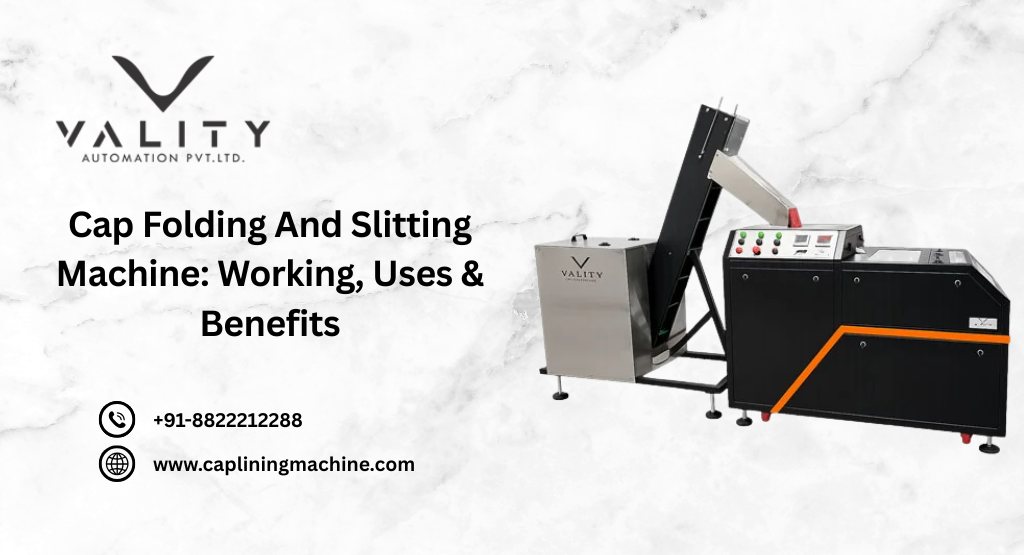
A Cap Folding And Slitting Machine is an automated industrial machine designed to perform slitting and folding operations on bottle caps and closures with consistent processing. It helps manufacturers improve ion efficiency, reduce manual handling and maintain uniform cap processing. Choosing an experienced Cap Folding And Slitting Machine Manufacturer in Ahmedabad can help businesses select a machine configuration suited to their cap type, ion requirements and packaging line.
Cap Folding And Slitting Machine for Consistent Bottle Cap Processing
In bottle-cap manufacturing and closure-processing operations, slitting and folding are important steps for preparing caps for their intended sealing and functional performance. A Cap Folding And Slitting Machine combines these operations into an organized ion process instead of depending entirely on manual handling.
Depending on the machine configuration, cap feeding, slitting, folding and discharge can be integrated into an automated workflow. Industry examples also show machines designed specifically for plastic caps, including PP and HDPE applications, with automatic feeding and rotary or blade-based slitting arrangements.
For manufacturers, the practical objective is not simply faster processing. The machine should provide:
- Consistent slitting and folding
- Controlled cap handling
- Reduced manual intervention
- Repeatable processing
- Better ion-line efficiency
- Easier integration with related cap-processing equipment
This makes an Automatic Cap Folding And Slitting Machine relevant for businesses looking to streamline repetitive closure-processing operations.
How Does a Cap Folding And Slitting Machine Work?
The working process generally begins with feeding caps into the machine. The caps are guided through the processing section, where the slitting mechanism performs the required cut or slit. The folding mechanism then forms the required folded section before the processed caps are discharged for the next stage.
A typical workflow can be understood as:
Cap Feeding → Cap Positioning → Slitting → Folding → Processed Cap Discharge
The exact mechanism depends on the cap design, material, required folding pattern and machine configuration. Some industrial machines combine slitting and folding into one automated system, while other ion lines use dedicated machines for individual operations.
For this reason, machine selection should be based on the actual cap and ion process rather than capacity alone.
Automatic Cap Folding Machine Features That Improve Production Efficiency
A well-designed Cap Folding Machine should focus on controlled movement, repeatable processing and convenient operation. Depending on the configuration, useful machine features can include:
- Automatic cap feeding
- Controlled cap positioning
- Slitting mechanism
- Folding mechanism
- Adjustable operating parameters
- Machine control interface
- Structured cap discharge
- Safety-oriented machine design
- Accessible processing components
- Production-line integration options
Some current machines in the Indian market use HMI-based control systems and automatic operation, while machine configurations vary by manufacturer and application.
The right combination of features depends on cap dimensions, material, ion volume and the required processing sequence.
Cap Slitting And Folding Machine for Plastic Bottle Caps and Closures
A Cap Slitting And Folding Machine is particularly relevant where plastic bottle caps or closures require controlled slitting and folding before subsequent packaging or assembly operations.
The machine may be selected for applications involving:
- Plastic bottle caps
- PP caps
- HDPE caps
- Flip-top and related closure designs
- Cap sealing and closure-processing operations
Industry listings specifically describe cap slitting and folding equipment for plastic caps and closure applications, including plastic bottle cap slitting and folding.
Because cap designs can differ considerably, manufacturers should confirm compatibility with the actual cap geometry, dimensions and material before finalizing a machine.
Where Is a Plastic Bottle Cap Slitting Machine Used?
A Plastic Bottle Cap Slitting Machine is used where bottle-cap ion or closure processing requires controlled slitting as part of the manufacturing workflow.
Relevant applications can include:
Beverage Packaging
Bottle closures used in beverage packaging often require consistent processing to maintain reliable closure performance. Automated cap-processing equipment can support repetitive ion requirements.
Pharmaceutical Packaging
Pharmaceutical packaging places importance on controlled and repeatable closure processing. The suitability of the machine depends on the specific cap design and ion process.
FMCG Packaging
FMCG manufacturers dealing with packaged consumer s may require high-volume closure processing where consistent cap preparation is important.
Food and Consumer Packaging
Food and consumer- packaging operations can use closure-processing machinery where compatible bottle-cap designs require slitting and folding.
Chemical Packaging
Certain chemical packaging applications also use plastic containers and closures. Machine suitability should be evaluated according to the closure design, material and ion environment.
The machine should therefore be selected according to the actual packaging application rather than simply the industry name.
How a Cap Slitting Machine Helps Reduce Manual Processing
Manual cap processing can become difficult to manage when ion volumes increase or when consistent processing is required across repeated batches.
A Cap Slitting Machine can help automate repetitive slitting operations and reduce dependence on manual handling. Its value can include:
- More consistent processing
- Reduced repetitive manual work
- Better ion workflow
- Improved process control
- Easier handling of continuous ion requirements
- Lower variation caused by manual operations
Automation does not eliminate the need for proper machine setup. Cap feeding, tooling, machine adjustments and inspection remain important for maintaining consistent output.
Cap Folding And Slitting Machine Applications Across Packaging Production
The machine can form part of a broader closure-processing workflow involving several stages. Depending on the ion setup, related equipment may include cap molding systems, cap loading equipment, wad or liner insertion machines, cap assembly systems and inspection equipment.
Modern closure-automation suppliers also offer integrated operations such as slitting, folding and wad insertion in a single machine configuration.
This creates opportunities to build a more connected ion line where cap processing is coordinated with downstream operations.
What Should You Check Before Buying a Cap Folding And Slitting Machine?
Selecting the right Cap Folding And Slitting Machine requires more than comparing machine prices. Evaluate the following factors before requesting a quotation:
1. Cap Material
Confirm whether the machine is suitable for the cap material being processed, such as PP or HDPE where applicable.
2. Cap Dimensions and Design
Cap diameter, height, geometry and closure design can influence the required machine configuration.
3. Required Production Output
Define your required caps-per-minute or hourly ion target. Do not select a machine only because it has a higher stated speed; actual output depends on the cap, feeding arrangement and processing conditions.
4. Slitting and Folding Requirement
Clarify the required slit position, folding pattern and processing sequence before selecting the tooling or machine configuration.
5. Automation Level
Consider whether you need automatic feeding, integrated discharge, HMI controls or integration with other machines.
6. Available Production Space
Machine dimensions, feeding direction and discharge arrangement should fit the existing ion layout.
7. Maintenance and Service
Ask about access to wear parts, maintenance requirements, technical support and spare components.
8. Future Production Requirements
If ion volume is expected to increase, discuss scalability and possible configuration upgrades with the manufacturer.
What Affects Cap Folding And Slitting Machine Price?
The Cap Folding And Slitting Machine price depends on the machine configuration rather than one universal market rate.
Important cost factors can include:
- Automation level
- Production capacity
- Cap size and design
- Material compatibility
- Feeding arrangement
- Slitting mechanism
- Folding mechanism
- Control system
- Machine construction
- Customized tooling
- Integration requirements
- Inspection or additional automation
- Installation and support requirements
Current Indian market listings show substantially different machine configurations and quoted prices, demonstrating why comparing price alone can be misleading.
For an accurate quotation, provide the manufacturer with your cap sample or technical details, desired output and processing requirements.
Why Choose a Cap Folding And Slitting Machine Manufacturer in Ahmedabad?
Choosing a Cap Folding And Slitting Machine Manufacturer in Ahmedabad can be useful for Indian packaging and closure manufacturers seeking access to engineering, fabrication and machine-support capabilities within Gujarat's established industrial ecosystem.
Ahmedabad-based suppliers currently offer cap slitting, folding and related packaging machinery, including automatic machines for plastic cap processing.
When evaluating a Cap Folding And Slitting Machine Manufacturer in Gujarat, focus on practical manufacturing capabilities rather than location alone:
- Machine design and engineering
- Fabrication and assembly
- Process understanding
- Machine testing
- Application-based configuration
- Installation guidance
- Spare-part availability
- Maintenance support
- Technical assistance
- Customization capability
For customers outside Gujarat, an experienced Cap Folding And Slitting Machine Manufacturer in India can also support wider domestic and export requirements depending on its delivery and service capabilities.
Customized Cap Folding And Slitting Machine for Different Production Needs
Not every cap-processing application is identical. Differences in cap size, material, geometry, folding requirement and ion speed can affect the machine configuration.
A customized Cap Folding And Slitting Machine may therefore be considered when standard configurations do not match the required process.
Customization discussions can cover:
- Cap dimensions
- Feeding arrangement
- Slitting requirements
- Folding configuration
- Production speed
- Control system
- Machine layout
- Integration with existing equipment
The manufacturer should first understand the application and evaluate the cap before confirming what customization is technically appropriate.
Manufacturing, Testing and Support for Reliable Machine Operation
A machine's value extends beyond fabrication. Proper engineering, assembly and testing are important for achieving repeatable operation.
A professional manufacturing workflow can involve:
Design → Component Selection → Fabrication → Assembly → Electrical/Control Integration → Machine Testing → Customer Installation → Commissioning → Technical Support
Before dispatch, the machine should be evaluated according to the agreed application and operating requirements. After installation, operators should receive appropriate guidance on machine operation, adjustment and routine maintenance.
For long-term operation, manufacturers should also consider wear components, preventive maintenance and availability of technical support.
Frequently Asked Questions About Cap Folding And Slitting Machine
What is a Cap Folding And Slitting Machine?
A Cap Folding And Slitting Machine is an industrial machine used to automate slitting and folding operations on compatible bottle caps and closures. It is designed to improve processing consistency and reduce repetitive manual operations.
What is a Cap Folding And Slitting Machine used for?
It is used for controlled slitting and folding of bottle caps and closures as part of cap manufacturing or packaging-related ion processes.
Can the machine process plastic bottle caps?
Yes, suitable machine configurations are available for plastic bottle-cap applications. Compatibility depends on the cap material, dimensions and design. Current industry offerings include machines specifically marketed for plastic caps and plastic bottle-cap slitting and folding.
Is a Cap Folding And Slitting Machine automatic?
Many industrial models are designed for automatic operation, although automation level and feeding configuration vary between machines.
What industries use cap slitting and folding equipment?
The equipment can be relevant to packaging operations serving beverage, pharmaceutical, FMCG, food and other consumer or industrial s where compatible bottle closures are processed.
What determines Cap Folding And Slitting Machine price?
Price depends on factors such as automation, ion requirement, cap design, machine configuration, feeding system, tooling, control system and customization.
Can a Cap Folding And Slitting Machine be customized?
Customization may be possible depending on the application. Cap dimensions, material, folding pattern, slitting requirement, output target and line integration should be discussed with the manufacturer before finalizing the configuration.
How do I choose the right Cap Folding And Slitting Machine?
Start with your cap sample or specifications, material, required ion output, slitting and folding requirements, automation level and available ion space. A manufacturer can then recommend a suitable configuration.
Get a Cap Folding And Slitting Machine Quotation for Your Production Requirement
If you are planning to automate cap slitting and folding operations, the right machine should be selected around your actual ion requirements rather than a generic specification.
Share your cap size, material, required ion output and folding/slitting requirement with a Cap Folding And Slitting Machine Manufacturer in Ahmedabad, Gujarat or India to discuss the appropriate machine configuration, customization options and quotation.
Contact the manufacturer for machine details, technical consultation and a ion-specific quotation.

